Wednesday, June 8, 2016

Rape in our Church curriculum

Rape of Dinah, Giuliano Bugiardini

In my last post, I wrote, "I am frustrated that, as Mormons, we aren't doing a better job of teaching young men and women about rape: what it is, what it isn't, what to do if it happens, that being raped doesn't make you dirty or worthless, that rape is fully the responsibility of the rapist and not the victim." In this post, I expand that idea.

Julie Smith recently wrote an excellent post for Times and Seasons titled, "Rape Culture in the Gospels." She brings our attention to specific teachings of Jesus that are profoundly opposed to rape culture. It is important to recognize what the New Testament has to say about respecting women, helping victims, and holding criminals responsible for their crimes.

But try looking for material that specifically addresses rapenot broad Gospel principles, but rape itselfand the scriptures present a painful collection of outdated teachings and heartbreaking stories. Here is a non-exhaustive list:
  • Moroni 9:9. The soldiers in Moriantum rape the Lamanite women that they are holding captive. This is described as "depriving them of that which was most dear and precious above all things, which is chastity and virtue." 
  • Genesis 19:4-11. The men of Sodom surround Lot's house and demand to be allowed to rape his two guests, who are visiting angels. Lot offers his virginal daughters instead.
  • Genesis 34. Shechem "defiles" Dinah, a daughter of Jacob. Modern translations such as the New International Version and the New Revised Standard Version use the word "rape." Dinah's brothers retaliate by killing Shechemite males and enslaving their wives. 
  • Numbers 31:15-18.  Moses instructs the army to destroy the Midianites, saving only the young female virgins. Those, he says, you may "keep alive for yourselves."
  • 2 Samuel 13. Amnon rapes his half-sister Tamar and is killed by Absalom.
  • Deuteronomy 22:22-27. The law says that a woman should not be punished for being raped, as long as the rape occurred in a field, where no one would have heard her if she screamed.

It is hard to imagine a less helpful set of scriptural passages. But the real shame is that our manuals, in some cases, do further harm:
  • Commenting on the story of Shechem and Dinah, the Gospel Doctrine teacher's manual says, "If Shechem had truly loved Dinah, he would not have defiled her." That is indeed an important principle. But while the word "defile" may have been appropriate in Elizabethan English, it is no longer appropriate today. To "defile" is to sully or to spoil. Words matter. 
  • And here's how the Gospel Doctrine manual describes 2 Samuel 13:15: "Amnon was attracted to Tamar and forced her to commit fornication with him." The manual goes on to give us this contextually inappropriate quote from Elder Gordon B. Hinckley: "I heard Elder John A. Widtsoe . . . say, 'It is my observation that a young man and a young woman who violate the principles of morality soon end up hating each other.' I have observed the same thing. There may be words of love now, but there will be words of hatred and bitterness later." As commentary on the story of a man raping his sister, this is breathtakingly awful. No, Amnon did not force Tamar to "commit fornication." No, they are not examples of young people who violated the principles of morality. 
  • Moroni 9:9 is in the Personal Progress manual as part of the first required value experience for Virtue. Young women are instructed to use this verse to "[s]tudy the meaning and importance of chastity and virtue." To be clear, they are to study a passage of scripture that seems to teach that one's chastity and virtue can be taken away by another person. From a more mature perspective, it is apparent this verse is presenting us with a euphemism: "Chastity and virtue" most likely stand in for virginity in this verse. But if we don't really mean "chastity and virtue" here, then why are we using this verse to teach young women about chastity and virtue? At best, it's confusing. At worst, it teaches girls damaging lessons about sexuality.

We can do better than this. We can be careful to use words that are consistent with our 21st-century beliefs about sexual assault. We can more clearly teach the difference between rape and consensual sex, and the difference between virginity and virtue. It is irresponsibledangerously soto emphasize sexual purity without teaching those lessons.

We don't need to throw out the scriptures, but we do need to provide guidance on language and cultural context for teachers and learners. And we must stop making excuses for any artifacts of rape culture that we find in the scriptures. As a Church, we must prioritize standing up for what's right over defending everything that we read in the scriptures. We are not fundamentalists. We can say, "Not everything in the Bible is of God." That will do far less harm to the faith than trying to reconcile sexual enslavement with the loving God that we know.

And while we're disavowing errors of the past, it is high time that we disavow the devastating statements about rape in Spencer W. Kimball's 1969 book, The Miracle of Forgiveness. We can love and honor President Kimball without condoning the teaching that, "It is better to die in defending one's virtue than to live having lost it without a struggle."

I have great hope that the Church of Jesus Christ of Latter-day Saints will more fully engage in the work of educating its members about rape and sexual assault. Rape happens to our brothers and sisters. When we teach chastity without also teaching the concepts of rape, assault, and consent, we are setting up victims for enormous amounts of shame and confusion. We must do better.

I recently wrote about my experience of rape as a BYU student here and here.

Sexual assault: Further thoughts


This is a follow-up to the post that I wrote three weeks ago. I realized that I had more to say: questions that I had left unanswered, pieces of the story that I wanted to fill in, and additional thoughts on sexual assault that I wanted to share. 

The question-and-answer format is for my own convenience. These aren't questions that people have actually asked me (people are generally reluctant to ask about what happened), but questions that I wanted to answer nonetheless.

Whatever happened to the rapist?

He made an unsuccessful attempt at a second rape, running away when the victim screamed. Later, someone called the police when they saw him behaving suspiciously in a dark parking lot and noticed his resemblance to the composite sketch that was in the papers. With a mountain of evidence against him, he confessed and received a prison sentence. I don't remember how long the sentence was, but it was certainly years, not months.

He was not a BYU student, though he was apparently an active Mormon. He was also a father and a husband.

Did I ever heal from the rape?

Yes, completely.

It was hard. But in many ways, I was fortunate: I was believed and supported. My attacker went to jail. I was an adult, not a child. The rape was a single incident, not an ongoing pattern of abuse. I sustained no permanent physical injuries. Had any of that been different, my path to recovery would undoubtedly have been harder.

Was I able to forgive the rapist? 

Anger is a healthy, normal part of the grieving process for survivors of rape, or any kind of abuse. I expected anger. I even wanted to feel angry. But the anger toward my rapist never came. It felt like my brain was refusing to engage in any emotion directed toward him, not even anger. I must have made a subconsciousand totally involuntarydecision that getting mad at my attacker would be humanizing him in a way that I wasn't prepared to handle.

And because he was a stranger to me, I had that option. I didn't have to think about him as a person, as one of the characters in my life. He wasn't part of my circle of friends. He wasn't in any of my classes at school. He wasn't sitting across the dinner table at family gatherings. I was lucky.

I am horrified that most rapists attack their own friends, acquaintances, and family members: people that they know, people that they're supposed to care about.

But rape is rare, especially in the LDS community, right?

Because most rapes go unreported, and most survivors don't talk about their experiences publicly, we are able to live with the comfortable illusion that rape is rare. It's not. 

In the last several weeks, six of my friends (five of them LDS) have told me that they are survivors of rape or sexual assault. I had already known of a small number of friends who were survivors, and somehowsomehowI wasn't expecting six more. On an intellectual level, I knew the statistics on rape and sexual assault. But emotionally, it is difficult to believe that this happens so frequently, that it's happening to my friends, to people I worship with, to neighbors, colleagues, and associates.

I have to confront the likelihood that I know many other survivors: friends and acquaintances who carry stories they haven't shared with me. Worse, I must confront the likelihood that many more in my acquaintance will be raped or sexually assaulted in their lifetime. 

I'm angry about it. I'm angry that sexual assault is so common. I'm angry that it keeps happening. I'm angry that some in our midst still don't understand what consent is. I'm angry that so many human beings are willing to exploit their relationships for sexual violence.  

And I am frustrated that, as Mormons, we aren't doing a better job of teaching young men and women about rape: what it is, what it isn't, what to do if it happens, that being raped doesn't make you dirty or worthless, that rape is fully the responsibility of the rapist and not the victim. 

Talking about rape is embarrassing and uncomfortable; it defies deeply entrenched taboos, especially within our church community. But it is essential work.

Let's go back to talking about anger. Was anger an issue at all after the rape?

Yes, but not in the way I would have expected. 

The psychological effects from the rape didn't come to me all at once. They accumulated over time, as if I were piece-by-piece building some sort of horrifying collection of brokenness. My mind did strange things, things that I hated, things that made me ashamed. 

Eventually, there was anger. But I didn't direct my anger toward the rapist. Instead, my mind linked angerordinary, everyday frustrationswith rape. They were in the same box in my brain, and they came out of the box together. Quick flashes of anger over, say, someone's rudeness at the supermarket were often accompanied by terrifying thoughts of rape. This lasted for many years. I wondered what kind of person I had become, and I wondered if this would ever pass. 

It did pass, but only after I stopped feeling ashamed of what I was experiencing. I had to stop seeing this distressing thought pattern as a moral failing, and start seeing it for what it was: a psychological injury resulting from a crime committed against me.

Finally, one more detail for the record: Did the rapist have a knife?

He said that he had a knife, but I never saw it or felt the blade. The realization that he probably had not had a knife became one more weapon in my arsenal of self-blame. I had fallen for an empty threat, and it took me a long time to forgive myself for that. But in the end I did.

I learned to replace self-shaming with self-compassion and, finally, with peace.

Perhaps our collective outrage toward rape and rapists, our compassion toward survivors, and our adamant refusal to excuse sexual assault or to tolerate victim-blaming will help those who have not yet found peace.


Friday, May 20, 2016

Sexual assault at BYU: My own story

In 1997, during my last year at Brigham Young University (BYU), I was raped just off campus by a stranger who approached me and asked for the time. He said he had a knife, and I did not resist the attack. I was frozen with fear. I didn't kick or bite or try to run away. I couldn't scream; I couldn't make even one sound of protest. For years, I would replay the attack over and over in my mind, trying to imagine a different outcome, trying to imagine myself fighting off the rapist. Even in my imagination, I could never escape from the rape. I couldn't make myself fight hard enough.

I was a young, devout Mormon woman with no prior sexual experience, and the rape left me with overwhelming guilt and shame. Self-blame was accompanied by a lingering feeling that I had lost some important part of myself, something that I wasn't sure I could ever regain. I had the sense that everything in my world was somehow tainted and dirty. For months, I hated my sexual organs, so horrified was I by what had happened to them and to me.

But here is the part of the story that I remember with gratitude: When I reported the rape, everybody believed me. Every single person. And nobody blamed me. Nobody asked me why I stopped to talk to a strange man on a dark street. Nobody wondered why I didn't scream or run when I had the chance. When I apologized, sobbing, to the police officer on duty for being stupid enough to walk home alone in the dark, his response was emphatic: "You had every right to walk down that street, " he said. "This wasn't your fault." When I asked my bishop whether God would forgive me, he told me as many times as I needed to hear it that there was nothing to forgive. When I asked my roommates whether they were disappointed in me, they told me that they were angry. Not at me, but at the rapist.

So many people during those first few hours and days were there to give me the support I needed: the group of young men—strangers to me—who called the police for me when I burst into their house after the attack, the detectives who questioned me, the doctors and nurse who examined me, my bishop who showed up to give me a priesthood blessing, my roommates who took me home, the dean of students who called me the next day to tell me how sorry she was that this had happened, the family members who loved me fiercely and protectively, the BYU psychologist who provided counseling services. It felt like I was being wrapped in successive layers of healing love by everyone I came into contact with. During the long months ahead, as I worked through my own trauma and shame, I knew that I could lean on people around me—people who saw me as worthy of respect and love, even when I couldn't respect or love myself.

Every survivor needs this kind of support. Rape victims should not have to prove that they are perfect rule-followers in order to get the help that they need. They shouldn't have to prove that they struggled and fought. And though this should be obvious to everyone, it's worth saying again: Rape victims who know their attacker should be treated with as much respect as victims of strangers. Date rape should outrage us as much as, if not more than, the less-common stranger-in-a-dark-alley scenario.

Reading the stories in the last few weeks of sexual assault victims who were treated poorly at BYU has been painfully eye-opening. It horrifies me that, while I was believed and supported, others have been blamed and censured because of suspected Honor Code infractions. Being raped was bad enough. I do not know how I would have survived had I also been shamed and punished.

I plead with university administrators to make reasonable changes in the university's policies and practices: Please do not punish victims of sexual assault for Honor Code violations that come to light over the course of the investigation of the assault. This puts victims in a terrible position, forcing them to choose between putting their academic career in jeopardy and letting their assailant go free. Please do not make policing Honor Code violations a higher priority than finding and prosecuting rapists.

Please do not add to victims' trauma by opening up an investigation into their behavior. Please give them the supporting services that they need to heal. Please let all students know that they are safe to report sexual assault.

Finally, please consider issuing an apology for the harm already done to students. As administrators of a university that affirms the Gospel of Christ, you have an opportunity to teach us all a lesson in humility and self-reflection. To this end, the newly-formed sexual assault advisory council and the website asking for feedback from the BYU community are wonderful first steps. Admissions of error will not make the university look weak or foolish. Rather, they have the potential to be a beautiful testament to the power of redemption and our universal need for grace.

Three weeks after publishing this post, I wrote a follow-up piece. You may read it here.

Monday, May 9, 2016

Vacuous Truths at the Dinner Table with My Preschooler

Sanzio 01.jpg
By Raphael - Stitched together from vatican.va, Public Domain,
https://commons.wikimedia.org/w/index.php?curid=4406048

I told Johnny that he should change one sentence that he wrote on his second-grade homework assignment. He had written,"The sun is the biggest star in the solar system." But the sun is the only star in the solar system, so that sentence doesn't mean much.

But of course, the original statement, in a mathematical sense, is true. It's not very helpful, but it's true. I mean, let's say the sun won first place in the sculpture category of the community art show. Even if it was the only entry in its category, it would still have won the contest.

Our dinner conversation that night went something like this:

Me: "Well, saying that the sun is the biggest start in the solar system is truebecause it's the only star in the solar systembut it's kind of silly. I mean, what if my  teacher told me to write about my family, and I wrote, 'All of my husbands work at NASA, and Owen is my biggest husband'?"

Everyone laughs and laughs.

I go on, "And Rosemary [who is not married] could also say truthfully that all of her husbands work at NASA. That statement is mathematically true."

Owen questions this, but then has an "aha" moment when he realizes that you can say that all members of the empty set are *fill in the blank,* and the statement is always true. 

"Well, it's mathematically true, but not linguistically true," he says.

Four-year-old Ezekiel is quiet during the whole exchange. Finally, he says, "Daddy, daddy, I have a math problem. All of my macaroni and cheese has a cousin, and the cousin's name is  . . . Glasses!"

Wednesday, November 11, 2015

16 Things to Say to Your Wife


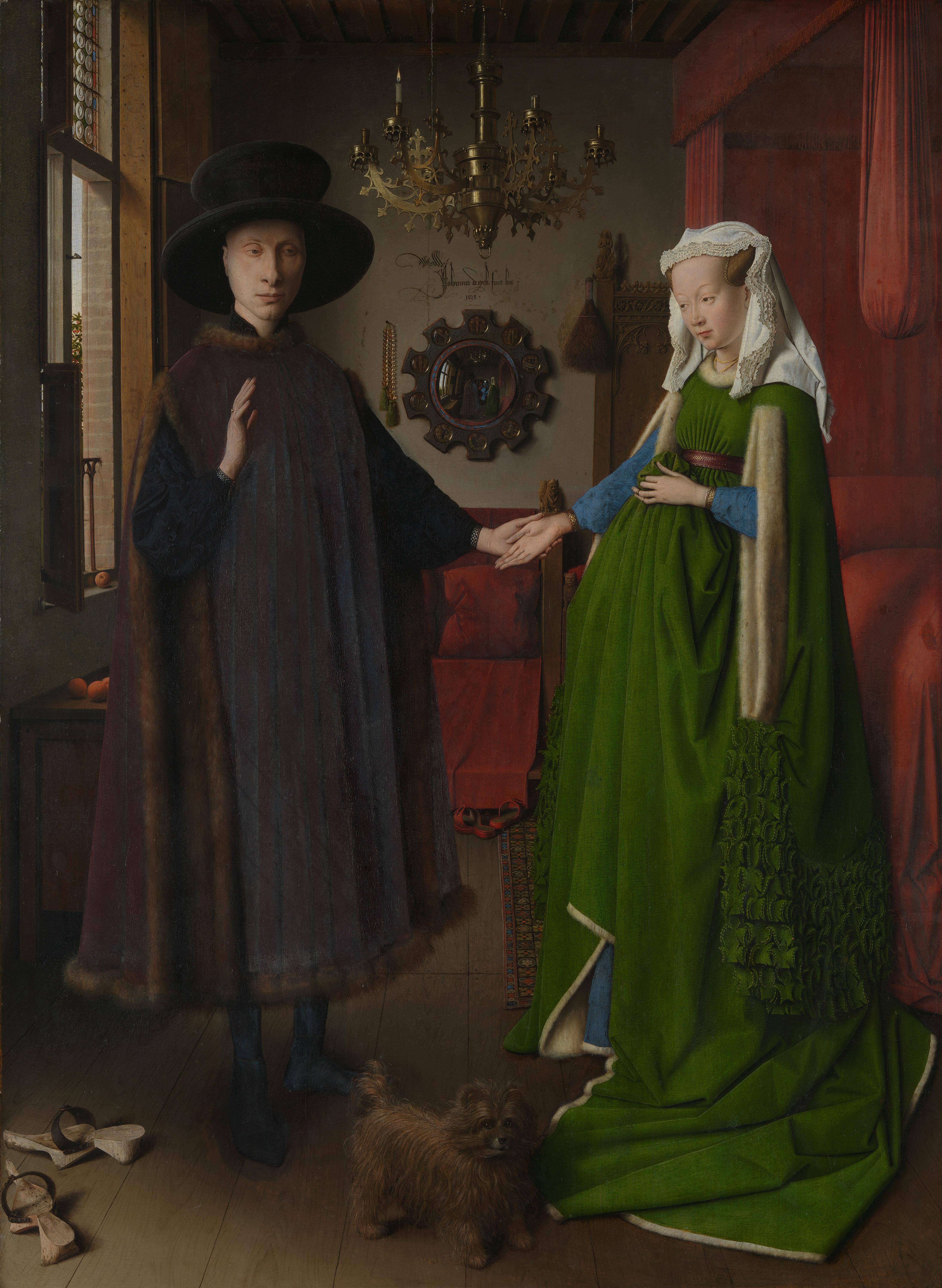
 https://upload.wikimedia.org/wikipedia/commons/3/33/Van_Eyck_-_Arnolfini_Portrait.jpg

I am not a professional. This is just what works for me. Maybe all couples should have "wish lists" of words that they each want to hear from their spouse.

1. I love you.

2. I am sorry.

3. I was wrong.

4. We disagree on this point, but I am willing to entertain the possibility that I might be wrong. Can you shed some more light on this?

5. I am sorry that you're hurting. What you're going through sounds really hard.

6. You are beautiful.

7. I am glad that I married you.

8. I would love to spend a romantic evening with you some time soon.

9. I figured out why I've been frustrated lately, and I'm ready to explain it to you.

10. I thought more about the conflict we had yesterday, and I realize that I was not being totally fair.

11. That isn't what I originally had in mind, but it sounds like a reasonable request.
    
12. That doesn't sound reasonable to me, but that's just my initial reaction to what you said. Can you tell me more about what you're thinking?
 
13. I know that we want different things, but let's find a compromise that we both can live with.

14. I want to make sure I really understand what you are saying. Let me know if I have it right. What I thought you said was . . . 

15. How have you been feeling lately about . . . .

16. How can I help?

Thursday, August 27, 2015

Governor Kasich, Abolishing the Metaphorical Teacher's Lounge Would Be Even Worse than Banning the Real One


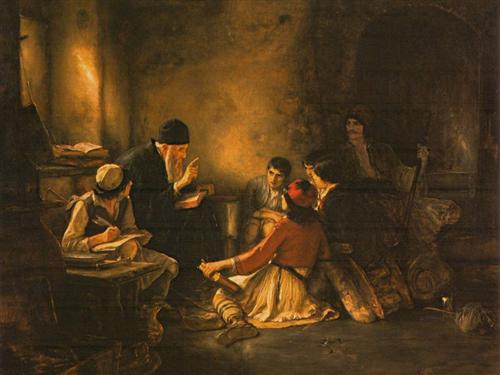
The Secret School - Nikolaos Gyzis
The Secret School, Nikolaus Gyzis

 
 Recently, Ohio governor and Republican presidential hopeful John Kasich raised some ire over a comment he made at an education conference in New Hampshire. The unabashedly anti-public-education governor said that if he were King of America, he would "abolish all teachers' lounges, where they sit together and worry about 'woe is us.'"

Kasich's spokesman, Rob Nichols, had this piece of snark to say in response to those who took offense:

He thinks teachers have far more support in their communities than they sometimes give themselves credit for and they shouldn't pay attention to the small number of pot-stirrers in their ranks who try to leverage problems for political gain. Anyone thinking he was making a comment on buildings or school architecture or space usage might need to look up the word "metaphor" in a dictionary.
Emphasis added by me, because I was pretty well stunned by that last zinger of a sentence. 

Note to Governor Kasich: If you want to try to defend your fairly outrageous statement, calling it a metaphor is not the way to do it. Yes, we know what "metaphor" means, and no, we didn't think that you were really talking about architecture. We get it: It is teachers' voices that you object to, not the teacher's lounge. 

I mean, let's unpack this metaphor. If Kasich is not talking about the brick-and-mortar space, then what is he talking about? What is the metaphorical teachers' lounge that he'd like to abolish?

Indeed, it's not the literal architectural space that bothers him: It's the gathering, the meeting of ideas, the organizing together. It's the outcry over poorly designed, misused standardized tests; it's the many thoughtful critiques of the new teacher evaluations. It's the multitude of blogs, Facebook groups, and forums that have sprung up in response to worsening working conditions and low morale. It's the collective yearning to break free from education reforms that undermine teaching and learning.

Of course Governor Kasich would prefer that teachers stop talking about what's really going on in their classrooms so that the narrative of education reform can continue, unhindered by teachers' lived realities. The metaphorical teachers' lounge is far more important than the literal one.

If Kasich really wants to do damage control, he needs to offer an apology. The "it was a metaphor" defense makes his statement worse, not better.

Wednesday, August 12, 2015

Guest Post - A Family Reunion


John Larsen is the guest blogger for this post.

I just returned from a 5 day 4 night vacation to Eastern Pennsylvania where I spent time at a Family Reunion. I was excited about it, mostly because it was vacation! Away from work! In the mountains! To be honest, I was a little terrified at the number of people that would be in one house with me. I have 8 siblings, and a smattering of neices and nephews, so getting together in one giant cabin requires some serious people niceties, which I've been working on, as well as some ridiculous grandiose food preparation, which I'm terrible at.

Thanks to people more organized than me, our Family Reunions always have a theme. Two years ago was "Larsen Family Forever!" and this year's was "We are one!" They don't put me in charge of these things, mostly because the theme would be the Simpsons opening music.

Well, we weren't one, we were 42 (or 44, depending on how you count the dog and that little runt of a nephew, so cute!). And believe me, cooking for 42 is a lot harder than cooking for 1. No one makes books about "Cooking for 42 in 30 minutes or Less!" Mostly because it can't be done, or because the author was eaten before the sustenance made it to the table.

When it was my turn for breakfast we did scrambled eggs, which I thought would be nice and easy. Indeed it was. Plus, there was something satisfying about scrambling 6 dozen eggs. It's not everyday I get to do that.

There can't be a Family Reunion with at least one major mishap. Although my siblings may disagree with me, it was clearly the family hike (the talent show was a close second, way too long. Understandably terrible though, I was in charge of it).

The hike was billed on the program (a month in advance) as an "Easy" hike to a waterfall, one that all of the grandchildren (10+ children younger than 5 years old) could easily handle without much difficulty.

What we didn't anticipate, however, was the decision quality of the adults. What happens when you reach a fork in the path, and the signpost has been uprooted by a heavy storm or rowdy teenagers? It's a lot of standing around, hemming and hawing, looking at maps, and then whoever was in charge (not me) making a decision.

All I did was take one look down the chosen path and I knew that it was bad news. I bit my tongue, and trudged onward, the rain and mud from the previous night soaking into my shoes.

I guess they thought that the path less travelled would make all the difference. It did, as it turned out. We never made it to the waterfall. Instead, we sloshed through mud and jungle hacked our way (with little kids on backs) down that path less traveled. Looked like a stream bed to me, but I wasn't the one in front.

I had GPS on my iPhone, and in a moment of inspiration, took advantage of technology and found out that we were in the middle of the forest. I was more pleased than I would like to admit, until my brother pointed out that he could tell the same thing just by looking around.

Luckily, we turned around before we had to make camp and skewer a baby rabbit or two and survive the apocalypse. After we made it back to the cars, we shamefully and silently got in our vehicles and went back to the cabin to shower and eat lunch. No one mentioned it again, except in whispered constraint to spouses in bed. 

The next morning there was a scheduled "Hard" hike for adults. No one even so much as made a peep about it; someone pulled out a board game for the adults and a movie for the kids. 

Later that day we had what Grandma thought would be the most unifying event of the reunion: all 8 siblings (and any spouses) would gather and reminisce together about growing up.

Oh, I had a lot to say alright, but I wasn't sure that they wanted this to be the time for me to bring up early childhood baggage. My wife has been hearing about it for the past 10 years, and it's a miracle that she sticks around for the "Family" part of "Family Reunion."

We did pretty well, only bringing up Dad's temper once. And that time that my brother stabbed me with a pencil (twice). We laughed, we cried. It was two hours long. Someone fell asleep; bound to happen anytime 42 people are in the same house at the same time, several of them with pacifiers in their mouth.

When we finally said our goodbye's at the end of the week and all drove away in our separate cars, I felt a pang of sadness as the dust settled. It wasn't just because I was returning to work or leaving vacation in the mountains. I was because I actually, kindamaybejustalittle, missed my siblings and their families. Even the ones that I like a little less than others.

Sure, there are some that I may have trouble forgiving (and surely those that have trouble forgiving me), and there were things that I wish I hadn't said or done, but life is full of those things. In the end, it's not any different than my daily routine with my wife and 4 children.

Except it was a lot bigger, and required 6 dozen eggs for breakfast.

Tuesday, May 19, 2015

A love song to Prince George's County, an excuse for not posting lately, and a crazy plan.

I haven't posted anything here for more than a month, because I've been devoting all my blogging energy to this new project.

Let me explain.

I have lived in Old Greenbelt for ten years, and I love it more than reason. I love the trees, the lake, the walking paths, the Co-op Grocery Store, the New Deal Cafe, the Labor Day Parade, the historic single-screen movie theatre in the center of town, the community center with its dozens of classes and events. And I love the people. Old Greenbelt has a disproportionate share of the sort of quirky people who would not have made fun of me in junior high school, and these are people who have a passion for making our community a real community. It's really something.

When I first moved to Greenbelt, I thought of my little community as a sort of oasis in the desert that is Prince George's County. Because Prince George's County, for as long as I can remember, has had a terrible reputation: In the greater Washington area, PG County is the proverbial "wrong side of town." It's tacky, trashy, crime-ridden, with underperforming schools. We Greenbelters, so I thought, should huddle together and avoid the rest of the county.

But I was wrong. A few years ago, I started exploring the county, and I was amazed at how much I liked what I found. Lovely parks, imaginative playgrounds, ethnic restaurants, bargain shopping, friendly people. I began to explore the neighborhoods: the old dignified neighborhoods, the beautiful new McMansions, the artsy neighborhoods, the up-and-coming neighborhoods. I started noticing how friendly people are, at the library, at the supermarket, at the playground. I found so much to love in this county. The pontoon boat tours at Bladensburg Waterfront Park, the farm animals at Watkins Park, the amazing Indian Creek Playground near Lake Artemesia, the historic Riversdale mansion. And we have the University of Maryland! We have GLUT, a co-operative vegetarian food market founded in the late 1960s by Vietnam War protesters where you can literally work for food. But we also have the upscale Wegman's, and we have dozens of farmers' markets. We've got the National Harbor, the Hyattsville Arts District, the Montpelier Arts Center, the Cheverly Publick Playhouse. We've got the brussells sprouts at Cafe Rue, the Kenyan style goat stew at Swahili Village, the Thai curries at Siri's Chef's Secret.This is not a wasteland; it's full of wonderful places waiting to be discovered. I have become a bona fide Prince George's County enthusiast.

We're affordable, down-to-earth, and we're moving in the right direction. Our rate of violent crime is still higher than Montgomery County's, but it has declined significantly in the last few years. What's more, our homicide rate is significantly lower than that of D.C. proper. And, sure, former County Executive Jack Johnson was convicted of corruption, as was a former superintendent of schools. But corruption like that is hardly unique to Prince George's County. Why does Prince George's County have such a poor reputation?

The answer to that question is probably complicated, but part of the answer undoubtedly lies with the schools. Prince George's County schools are underperforming, by just about any measure you want to look at. There are definitely bright spots in the landscape. Our son's neighborhood school, Greenbelt Elementary, is doing comparitively well, and he has had a positive experience in the two years he's been there. We have been impressed with the staff and the students, and we are fortunate to have a school building that is in relatively good repair. That doesn't mean that there is no room for improvement. To cite one example, until this year, when we were lucky enough to get a full-time art teacher, kids only had art class once a quarter. Once a quarter. (For kids in many other schools in the county, this is still the case.) And there are good things happening throughout the county: graduation rates are up, enrollment is increasing after a nine-year decline, innovative programs are being developed. Still, by and large, most people view county schools unfavorably.

We are fortunate to live in the Greenbelt Elementary School district. Greenbelt Elementary is not perfect, but it's a good school, and I want other families across the county to have the confidence in their neighborhood school that we do in ours. As I have spoken with parents and teachers and listened to their gripes about the county schools, I've noticed that most of us don't know whom to contact with concerns that cannot be resolved with the principal. Most of us don't want to write letters, make phone calls, or testify at Board meetings, because we don't think we can make a difference. Most of us don't even want to try to change anything, because it seems hopeless. There has been a pervasive sense of futility in the PGCPS community, and that sense of futility has led to apathy and resignation.

A few of us decided to band together, call ourselves an advocacy group, and try to figure out how to engage with the PGCPS power structure to influence the policies and practices that govern our schools. We believe that parents and teachers must have a louder voice in the system and find ways to effect positive change. We believe that this is worth going out on a limb for.

We gave ourselves the name "Prince George's County Advocates for Better Schools,"and we started a blog with the same name. We have a slogan (informed! connected! empowered!) and a vision statement and everything. I admit that the vision statement is a bit over the top — sort of jargon-y and full of buzzwords (though we've so far avoided "paradigm shift" and "synnergy") —but please tell me how else one writes a "vision statement."

We have found that we are not alone in our goals! There are groups of engaged parents, teachers, and community members scattered throughout the county. One of the purposes of our blog is to help connect people who have similar concerns and interests. We continue to find people who are fighting the good fight in their (geographical or philosophical) corner of the county, and we are often amazed at their efforts. We want more people to join forces. We want more people to have the information, support, and confidence they need to speak up.

So, that's why I haven't been posting on my personal blog lately. This project has taken an enormous amount of my time and mental space, more than I would have imagined at the outset. And do we have a large following yet? Not really. Have we gone viral? No. Have we made a difference yet in the schools? That's unclear. Do I often feel like Don Quixote? Yes. I am at peace with the reality of my situation: This is hard work without a whole lot to show for it (yet), but this was something I needed to try — and still do.

Long live Prince George's County and the public schools therein.

Saturday, March 21, 2015

Pi on the piano, the first 41 digits.

When my cousin heard I was having a Pi Day party, she called me up from Missouri and suggested that we play pi as a melody. So I wrote down the first 41 digits of pi on a long piece of orange paper and played them on the piano in the key of C, where 1 corresponded to middle C, 2 corresponded to D, and so on. (Zero became the highest note, an E.) In the left hand, I added chords and arpeggios. I was surprised at how melodic the random sequence of notes sounded when I added rhythm and accompaniment.

Here's the video, just over one minute long.

Tuesday, March 3, 2015

Griping about Downton Abbey, Part 2.

                        Episode 9 Trivia Quiz

I'd love to apply for the job of advisor to Julian Fellowes. I could do a world of good for Downton Abbey's beleaguered characters.

The fifth season was another indulgent peek into the upstairs and downstairs lives of a fictional great house in early 20th century England. While I'm fairly certain I wouldn't be comfortable actually living the lifestyle of the Crawley family, the unrestrained opulence continues to draw me in: the enormous drawing rooms, the impossibly long banquet tables, the clothes, the hats, the upholstery.

Executive producer Gareth Naeme enthuses that these characters are "so like us," but the Crawleys inhabit a strange and fascinating world. It is a world in which grown men and women have servants who dress them twice a day and put them to bed at night. A world where small children live almost entirely separately from their parents, paying them short visits at teatime, but adult children are expected to live with, travel with, and eat breakfast, lunch and dinner with their parents.

Yes, it is an odd world to my 21st century American eyes, and it is made odder by the plot twists and turns cooked up in the writers' imaginations. In a recent New York Times interview, Julian Fellowes made the startling revelation that he is reluctant to let Downton Abbey develop into a soap opera. He wants to keep the narrative real, or at least "realish." (Realish is his word, not mine.)

Hmmm.


Mr. Fellowes, if you're reading this, I offer you my Season 5 observations and suggestions.


On the Bateses' continued troubles.


At some point, the writers decided that, in order to keep our interest, they needed to keep the Bateses constantly embroiled in murder cases. This was a serious miscalculation.

Here's Julian Fellowes in the NY Times interview:

Happiness is quite a difficult concept when you have an ongoing drama. What you can’t do is have everything go right. Then you’re just left with a couple saying, “Did you have a good day, darling?” “Terrific, why don’t you sit down while I get dinner?”


Wrong, Mr. Fellowes. This is exactly what should happen to the Bateses. What we don't need is more time spent on a murder case that manages to be both dull and ludicrously improbable. Whatever domestic boredom you were avoiding by keeping this storyline open would be far better than the tedium we're enduring now. The Bateses are becoming all work and no play, and it's frankly exhausting.

If the Bateses' happiness bores you, then let them fade into the background as minor characters who pop in and out of the room, occasionally imparting gentle wisdom to anyone who needs it.


On premature bereavement. 


We essentially have three young widow(er)s in the Crawley family — Edith is not legally a widow, but she's close enough to count — all of whom have lost their partner at the birth of their only child, or during the pregnancy.  The love stories of all three Crawley sisters have followed the same schema: Love → marriage/engagement → unexpected death of spouse (or self) immediately upon arrival (i.e. birth or conception) of  firstborn child.

This is a cruelly repetitive plotline, a failure of imagination on the part of the writers, and it comes at the viewers' expense. Nobody wanted any of these people to die in the first place, and the fact that none of them get more than a brief moment with their child before passing on is beyond the pale.

Note to writers: Don't even think about trying this same storyline with Rose and Atticus. Should you bless them with a child, let's agree that both parents will survive for at least the first few months of their baby's life. Ideally, they'd live to see their children well into their tweens, but I don't want to ask for too much.


On Edith.


Edith's story has always been painful to watch, but this season was particularly bad. I can't possibly reconcile myself to the way Edith unceremoniously tears little Marigold away from her loving adoptive family. For Marigold, the Drews are her parents, the only ones she remembers. No mention is made of the difficulty she might have adjusting to life at Downton, away from the woman she thought was her mother. No arrangements are made for her to visit the family that have loved her as their own. Once Marigold is safely at Downton, the story moves on to the ever important topic of who knows Edith's secret. Because, clearly, keeping track of who's gossipping about Edith is more important than any attachment issues her child might have after being yanked from one family to another. That Marigold's pain and the Drews's pain have already been forgotten feels cheap and false.

More on Edith . . .

When it comes to broken hearts, Edith's resume is uniquely impressive. It's not just the sheer number of disasters; it's the quality. Her adventures in romance have been colorfully, exquisitely, gloriously bad. As a collection, they have spanned all possible levels of absurdity, from the sad-but-humdrum to the patently ridiculous. They have drawn from all walks of life, every age, social class, and marital status.

Recall her history:

Season 1: Edith suffers rejection from two different cousins, both (in succession) heirs to Downton, both in love with Mary. When she finally lands a suitor (a man older than her own father), he drops her after Mary tricks him into believing that Edith is mockingly toying with him.
Season 2: A disfigured burn victim and supposed recovered amnesiac comes to Downton with his Canadian accent (apparently a lingering effect of the amnesia), pretends to be the dead cousin Edith had always loved, wins her heart, and then leaves once the jig is up. (!) She also has a brief fling with a married farmer, before the angry wife bans her from the farm.
Season 3: The older man from Season 1 comes back into her life, then jilts her at the altar.
Season 4: The father of her unborn child, who, by the way, is married to a crazy woman he's trying to divorce, disappears. In Season 5 they find his remains.

Clearly, the writers will leave no stone unturned until they've explored all possible angles of heartbreak for Edith. We're left wondering,"What next? A depressive poet who drinks himself into oblivion? A con man who woos her and then leaves town with the family jewels? A much younger man who happens to be a pirate?"

In all seriousness though, here's my best guess: Edith will be courted by a closeted gay man who is using his relationship with her as a cover for his sexual orientation. He'll be a sensitive, sympathetic character, and she'll fall madly in love with him. Meanwhile, he'll fall madly in love with Barrow, and Edith will be devestated when she discovers the truth.

Note to writers:  Please consider the following alternative. Edith falls in love with an unmarried man, who loves her in return. They get married and both live well beyond the birth of their first child together. The revelation that Edith's foster daughter is actually her love child should provide more than enough drama for this hypothetical couple to work through, so there's no need to bother with some overblown plot development involving amnesia, secret insane wives, piracy etc.

On Mary.


In seasons past, Mary was a compelling character with a mixture of personal failings and redeeming qualities. We saw selfishness, pride, compassion, conscience, coldness, love. And despite her reserve, Mary always brought a great deal of pathos to the show.

But not anymore. Now she is vacant and superficial. She has completely moved on from her grief over Matthew's death to the point where she never mentions his name. Yes, we know that she wants to marry again, but an occasional moment of sorrow, or perhaps a loving look at a framed photograph or a lock of hair (or the son Matthew left her) would seem appropriate. And why, after losing her own husband, has she not even a shred of compassion for Edith? Why has the relationship between Edith and Mary regressed to the petty nastiness that we saw back in 1912? It's 1924 now, and these women are not teenagers; they're likely in their thirties.

Thankfully, the Christmas special softened Mary just a bit. She is genuinely moved by the Bateses' plight, and she visits Anna in prison. She holds hands with Tom and Edith in a moment of remembrance for Sybil. She sings Silent Night at the Christmas party. It is not enough.

Note to writers: I want more from Mary, and I have drawn up a wishlist for your convenience: A bit of compassion for Edith. A bit of tenderness for little George. A moment of longing for Matthew. Some depth of feeling for her next love interest and some vulnerability as a result. And, if I am going to dream big, I would love to see Mary in a situation where she must temporarily take on some simple household chores and childcare duties. I'm sure the writers will be able to contrive an appropriate storyline.


On finding love late in life.


On the rare occasions that an older character in film or television is permitted to develop a romantic relationship, it's almost always meant to be comical. Two senior citizens flirt a bit, and suddenly the soundtrack switches to the funny music.

Well done, Downtown Abbey, for taking a different tack. The characters in the older generation have more than their share of romance this season, and we're meant to take them seriously. The funny music is reserved for the likes of Spratt and Denker's chicken soup shenanigans (though that story wasn't nearly as amusing as the writers no doubt meant it to be).

I had read a spoiler, so I knew that the Hughes-Carson engagement was coming, and I was pleasantly surprised at how nicely that story played out. Mr. Carson takes himself so seriously that he is always one step away from being ridiculous. But the proposal scene was sweet and sincere, when it easily could have been silly.

I've never been particularly invested in the Isobel-Lord Merton relationship, preferring Dr. Clarkson as a potential soul mate for Isobel, so I wasn't too disappointed when that didn't work out. But I was pleased that this was a relationship that we were supposed to be invested in. This wasn't the comic relief.

The head-scratcher for me was the affair between Violet and Prince Kuragin. I found it entirely unbelievable that he should be madly in love with her, and that she should have feelings for him. He is younger and bearded and Russian and roguish looking. He doesn't strike me as Violet's type.

And I have to put in a good word for our youngish-middle-aged lovebirds, Molesley and Baxter. After her trouble with the law and with Barrow, Baxter has achieved a level of serenity that is a beauty to behold, and Molesley has finally come into his own.  Note to writers: It will be a travesty if these two don't end up happily ever after.


Saturday, January 24, 2015

ASL to zoology: Alphabet books from A to Z.

I searched our bookshelves and found that we own close to 30 alphabet books! I brought them into the living room and arranged 26 of them on the floor like this, each letter of the alphabet corresponding to a different alphabet book:


Here is my alphabet of alphabet books (sort of a meta-alphabet-book, if you will). I like all of these, but I have starred a few that I think are particularly good. (See letters B, I, J, L, S, T, and Z.) All titles are hyper-lined to their Amazon pages.

A is for American Sign Language.  The Handmade Alphabet, Laura Rankin.

The illustrations for this book are cleverly done! Each page shows a hand forming a letter of the alphabet using sign language, accompanied by something that starts with that letter. The C hand is holding a cup, the E hand is being erased from the page, etc.


★ B is for Beautiful Black and White Illustrations. Pigs from A to Z, Arthur Geisert.

This is one of the best alphabet books I've seen. The whimsical pictures tell the story of seven pig siblings who build an elaborate tree house and then go home for baths and bedtime. Geisert's illustrations are richly detailed, and the reader can hunt for several letter shapes hidden in the artwork on each page.


"S is for shingling." Notice the S's hidden in the picture. There is also an R and a T.

"W is for washing clothes in a wind-powered washing machine."


C is for Cultural Traditions of Africa.  Ashanti to Zulu: African Traditions, Lauren Musgrove, pictures by Leo and Diane Dillon.

The illustrators of this Caldecott winner are Diane Dillon and the late Leo Dillon, a husband-and-wife team who won numerous awards over the course of their long career, including two Caldecott medals. They shared a career and an interracial marriage, both of which began in the 1950s and lasted for more than half a century. Their Wikipedia article is here.


D is for Doll. A is for Annabelle: A Doll's Alphabet, Tasha Tudor.

This book indulges the sensibilities of my my inner 5-year-old girl, who is in raptures over these illustrations.  Tasha Tudor lovingly depicts a dainty porcelain doll with an extravagant wardrobe of Victorian dresses and accessories.


E is for Elephants. ABC de Babar, Jean de Brunhoff.

Not to be confused with Babar's ABC by Laurent de Brunhoff (Jean's son), ABC de Babar was created for French speakers. Each wordless two-page spread depicts a scene packed with objects and activities beginning with the featured letter — if you write the words in French, that is. It's great for kids learning French, but some of the French words begin with the same letter as their English counterparts (e.g. montagne/mountain, orange/orange), so the book is fun for English speakers too.


F is for Flowers. Alison's Zinnia, Anita Lobel.

This book shows us 26 gorgeous flowers and 26 girls, each of whom receives a flower from the girl on the previous page and gives a flower, in turn, to the girl who comes next in the alphabet. Alison acquired an Amaryllis for Beryl. Beryl bought a Begonia for Crystal. Crystal cut a Chrysanthemum for Dawn. Etc.


G is for Garden. Pierrot's ABC Garden, Anita Lobel.

Here's another book by Anita Lobel, also featuring growing things, but with a different style of illustration. This one is a Little Golden Book. Pierrot, the traditional French character of pantomime, gathers things from his garden to take to his lovely Pierrette.


H is for History Lesson. A is for Abigail: An Almanac of Amazing American Women, Lynn Cheney and Robin Preiss Glasser.

This book is a delightful homage to the many women who have shaped our history. And yes, that's Lynn Cheney, wife of Dick Cheney. I scoured the book to see if I could find a politically conservative bias, but I didn't. (Let me know in the comments section if you have found otherwise.) 


★ I is for Ingenious. The Alphabet Room, Sara Pinto.

This one is excellent! Each letter marks a door that opens into a room. The first time we see the room, it is completely bare except for some apples. When we get to the B page, we see apples and bowls. On the C page, a cat joins the group. By the end of the book, we have a dog, an egg, a fish, and so on. The characters entertain us in new ways on each page: The dog tries on the jester's costume, the lamb eats the ivy, and everyone takes turns wearing the mustache. The painting on the wall, introduced on the P page, has its own character who changes positions and eventually drives out of the painting in his wagon. 


J is for Juicy. Eating the Alphabet: Fruits and Vegetables from A to Z, Lois Ehlert.

My three-year-old and I can't get enough of the luscious watercolor illustrations in this book that celebrates fruits and vegetables. My husband is less enthusiastic (his assessment: "slightly below average"), but if you are a fan of artistic depictions of food (as I am), then this book really delivers. The text throughout the book is minimal, but the illustrated glossary at the end gives information and pronunciation guides for each fruit and vegetable.


K is for Kid Favorite. Gyo Fujikawa's A to Z Picture Book, Gyo Fujikawa.

When I was a kid, this was my favorite alphabet book. I pored over the pictures and used tracing paper to copy my favorites. The B pages were my favorites, though J (which featured an entire two-page spread full of jumping children), D, and V were certainly contenders. Gyo Fujikawa was a pioneer in depicting children of many races and nationalities in her picture books.


★ L is for Lovely. A Flower Fairy Alphabet, Cicely Mary Barker.

Cicely Mary Barker's work is so very lovely. Each letter of the alphabet gets its own flower fairy and poem to go with it. (She couldn't think of flowers that start with U or X, so those fairies are drawn as little characters in plain clothes. The X Fairy is a little imp, teasing his neighbor, the Yellow Deadnettle Fairy.) How can you not love these fairies with their clothes drawn to look like specific flowers? Just look at the Nasturtium Fairy's adorable little outfit! And the Fuchsia Fairy's dress!

All of Barker's books are lovely. I particularly like Flower Fairies of the Autumn and Flower Fairies of the Trees, because of all the lovely things she does with nuts and seeds and leaves. Note: I don't actually own the alphabet book as a stand-alone. It's included in The Complete Book of Flower Fairies, which I do own. The disadvantage of that book is that not all of the illustrations are full-size.


M is for Marvelous Market. On Market Street, Arnold Lobel (author), Anita Lobel (illustrator).

This is the third Anita Lobel book in our alphabet of alphabet books, and it's also a well-deserved Caldecott Honor book. The merchants on Market Street are made out of the stuff they're selling. My kids are fascinated with these pictures.


N is for Nature. Discovering Nature's Alphabet, Kristina Castella and Bryan Boyl.

Nature photographs depict the forms of each letter.


O is for Old-Fashioned Alphabet Rhyme. A Apple Pie, Gennady Spirin.

Spirin takes a traditional English alphabet rhyme and puts his own delicious spin on it.


P is for Paper Engineering. Parading with Piglets, Biruta Hansen.

So clever! The chimpanzee claps, the frog blinks, the Dalmatian's spots appear and disappear. This one appears to be out of print, though it's still available used at a reasonable price.


Q is for Quirky. Once Upon an Alphabet: Short Stories for All the Letters, Oliver Jeffers.

For each letter, Jeffers gives us a very short story, some of which are interconnected in surprising ways. My favorite story is the one for the letter W. The ingenious inventor (whom we first met at the letter I) is back, and we are introduced to the Whiraffe, a creature with the body of a giraffe and a whisk for a head. Here he is, whipping cream.


R is for Roadsigns. Backseat AB-See, Maria van Lieshout.

The illustrations are bold and visually pleasing, but roadsigns aren't exactly my thing. This book is perfect for my three-year-old son, however, who has started to pick out letters (well, mostly just the letter E) on roadsigns during car rides.


★ S is for Seuss. Dr. Seuss's ABC, Dr. Seuss.

This book is so good that I actually have the whole thing memorized. Really. And I'm not even a Dr. Seuss enthusiast, generally speaking. But stick with the regular paper-pages-book, not the board book. The board book has altered the text significantly, ditching some of the wonderful rhythmic poetry.  For example, the board book cuts out this wonderful rhyme: "Many mumbling mice are making midnight music in the moonlight. Mighty nice," which I understand is used as a vocal warm-up in some circles. 

For me, this is the quintessential Dr. Seuss, much more so than The Cat in the Hat or Green Eggs and Ham. Itchy Ichabod, Silly Sammy Slick, Oscar's Only Ostrich, the Quick Queen of Quincy, and the Zizzer-Zazzer-Zuzz will forever be a part of my consciousness. 


★ T is for Three-Dimensional. ABC3D, Marion Bataille. 

This pop-up book is beautifully engineered. The S has wheels inside its curves that spin as you move the page. The V becomes a W when it's reflected in the shiny paper on the next page. It's really impressive.


U is for Unusual and Understated. Anno's Alphabet, Mitsumasa Anno.

Note that the line drawings in the borders depict plants and animals that correspond to the appropriate letter. 


V is for Vintage. Brian Wildsmith's ABC, Brian Wildsmith.

This book is from my husband's childhood. His mother kept it in good condition and gave it to us when we had our first child. It seems to be out of print, except as a board book.  I think that the illustrations are striking.


W is for Wildflowers. Wildflower ABC: An Alphabet of Potato Prints, Diana Pomeroy.

Potato prints of wildflowers.


X is for EXtra. Richard Scarry's ABC Word Book, Richard Scarry.

Putting this under X is a bit of a stretch, but I couldn't bring myself to leave out Richard Scarry's contribution to the alphabet book canon, and I had already used S for Seuss.

The Busytown folks are up to their usual antics in this original Richard Scarry book. Two things make this alphabet book unusual: 1) Each featured letter is printed in red, wherever it is found on the page, whether it's at the beginning of the word or somewhere in the middle. Somehow, that's very appealing to me. 2) The consonant digraphs Ch, Sh, and Th each get their own two-page spread. Smart.


Y is for Young Children Who Are Yawning. A to Z, Sandra Boynton.

This book is great for young children, especially when a short bedtime story would be strategically wise. The illustrations are attractive and fun, but they're simple enough that one can zip through the book quickly.


★ Z is for Zoological. Animalia, Graeme Base. 

Each letter gets a gorgeous page or two full of animals and other things that begin with the appropriate letter. And on each letter's page (or two-page spread) a boy with a striped shirt and glasses (but not Waldo) is hiding.

Add caption
Can you find the boy in the striped shirt? (Look out the window.)

Here he is.